
Choosing the 2026 best Air Breaker for global buyers is not simply a matter of comparing prices or brand names. A reliable choice must match the electrical system, installation environment, and maintenance capability. Rated voltage, current, short-circuit capacity, trip characteristics, insulation level, and operating temperature all deserve careful review.
A small panel in a clean factory differs greatly from a dusty outdoor switchboard near a port. Humidity matters. So does altitude. A breaker that performs well at sea level may require different derating at high elevations. Buyers should also check IEC 60947-2 compliance, regional certification, spare-part availability, and the manufacturer’s technical support. These details often decide whether an Air Breaker remains dependable after years of switching.
Electrical safety expert Mike Holt puts the practical point this way: “Safety is not expensive; it is priceless.” His statement remains relevant when buyers evaluate protection equipment across different markets. The lowest purchase price can hide higher installation, testing, and downtime costs. Still, no selection is perfect. Product data may be incomplete, and local conditions can be misunderstood. That is why verified test reports, clear technical drawings, and advice from qualified engineers matter.
This guide examines leading Air Breaker options for 2026, focusing on performance, protection functions, global usability, and long-term value. It also questions common buying habits. A famous brand is not automatically the best fit. The right breaker is the one that protects the system, suits the site, and can be supported when something goes wrong.
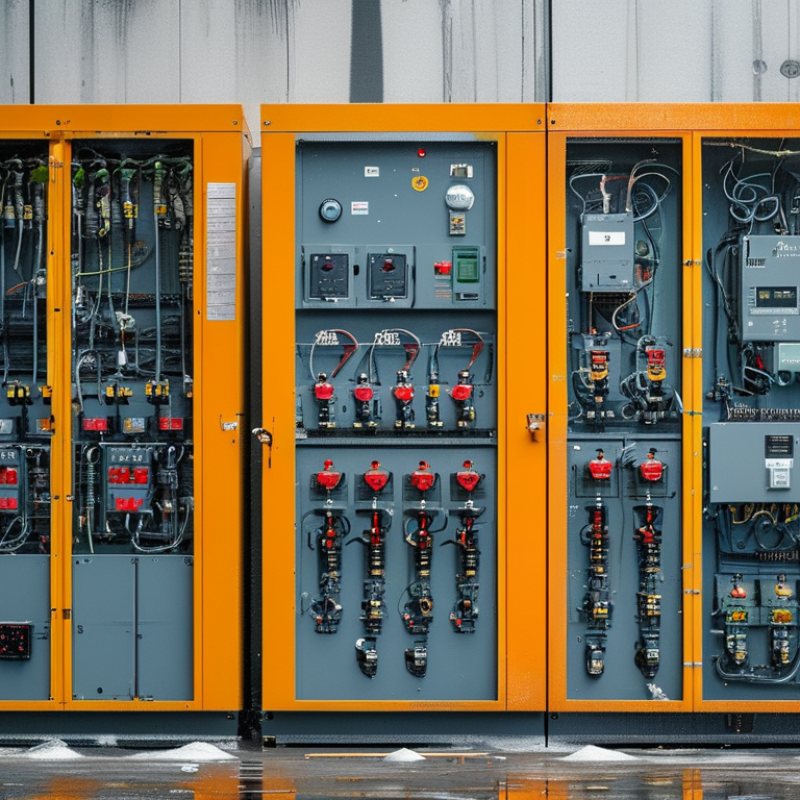
2026 Best Air Breaker for Global Buyers?
What Is an Air Breaker and How Does It Protect Electrical Systems?
An air breaker, often called an air circuit breaker, protects low-voltage electrical systems. It uses air to extinguish the arc when contacts separate. This design suits industrial panels, commercial buildings, and large distribution boards. Unlike a simple switch, it reacts to dangerous current conditions. Its trip unit can detect overloads, short circuits, and sometimes earth faults. The breaker then disconnects power within a controlled time.
The protection process is practical and visible. During a fault, contacts open inside the breaker chamber. Arc runners stretch and cool the electrical arc. The system limits heat damage to cables, busbars, and connected equipment. Adjustable trip settings help match protection to the installation. However, incorrect settings can create a false sense of safety. A qualified technician should calculate load current, fault levels, and coordination requirements.
Global buyers should examine rated voltage, current capacity, breaking capacity, and operating frequency. Terminal design also matters when panels use different busbar layouts. Check test reports, installation instructions, spare-part support, and local compliance requirements. Dust, humidity, and frequent switching can affect service life. Regular inspections should include contact wear, insulation condition, and trip-function testing. No air breaker is maintenance-free. That assumption deserves more careful attention. Reliable protection depends on correct selection, professional installation, and documented testing.
| Selection Dimension | Typical Specification or Option | What It Means | Protection or Buying Consideration |
|---|---|---|---|
| Product Type | Air Circuit Breaker (ACB) | A low-voltage circuit breaker that uses air as the arc-extinguishing medium. | Designed mainly for main incomers, bus couplers, generators, and large feeders in low-voltage switchboards. |
| Rated Voltage (Ue) | Up to 1,000 V AC in common low-voltage applications | The maximum system voltage for which the breaker is designed under specified operating conditions. | Confirm compatibility with the local network voltage, frequency, insulation level, and applicable certification requirements. |
| Rated Current (In) | Typically 630 A to 6,300 A | The continuous current rating of the breaker under defined installation and temperature conditions. | Select a rating above the calculated continuous load while considering ambient temperature, enclosure heating, and future expansion. |
| Rated Short-Circuit Breaking Capacity (Icu) | Commonly 25 kA to 150 kA at the rated voltage | The prospective short-circuit current the breaker can interrupt under its specified test conditions. | The required value must be equal to or greater than the available fault current at the installation point. |
| Service Breaking Capacity (Ics) | Specified as a percentage of Icu, often 50%, 75%, or 100% | Indicates the breaker’s ability to interrupt a fault and remain suitable for continued service, subject to the standard and test conditions. | A higher Ics is valuable for critical facilities where continuity after a fault is important. |
| Number of Poles | 3-pole or 4-pole | Three-pole devices switch the three phases; four-pole devices also switch the neutral. | Use four-pole switching only when the system earthing arrangement and project design require neutral isolation. |
| Installation Format | Fixed or draw-out | Fixed breakers remain connected in the switchboard; draw-out breakers can be moved between connected, test, and disconnected positions. | Draw-out construction can simplify inspection, testing, replacement, and maintenance in critical installations. |
| Trip Unit | Electronic trip unit with long-time, short-time, instantaneous, and ground-fault functions | The trip unit detects abnormal current conditions and commands the breaker to open. | Adjustable protection settings support coordination with downstream breakers and help reduce unnecessary outages. |
| Overload Protection | Long-time adjustable protection | Responds to sustained overcurrent caused by excessive loading or inadequate conductor capacity. | Set the long-time pickup and delay according to cable ampacity, transformer capacity, motor characteristics, and coordination studies. |
| Short-Circuit Protection | Short-time and instantaneous protection | Provides rapid interruption during high-current faults such as phase-to-phase or three-phase short circuits. | Short-time delay may be used for selective coordination, but settings must remain within the equipment’s withstand capability. |
| Ground-Fault Protection | Optional or integrated ground-fault sensing | Detects current flowing through an unintended path to earth or the equipment enclosure. | Useful for reducing damage and fire risk; settings must be coordinated with the earthing system and residual-current protection. |
| Closing and Tripping | Manual, shunt trip, undervoltage release, and motorized operating mechanism options | Allows local operation and remote control or automatic opening under defined electrical conditions. | Verify control voltage, closing coil requirements, remote-trip logic, interlocks, and emergency-opening functions. |
| Selectivity and Coordination | Adjustable time-current settings and zone-selective interlocking options | Helps the protective device nearest to the fault open first while upstream devices remain closed. | Request time-current curves and perform a coordination study for hospitals, data centers, factories, and other high-continuity facilities. |
| Mechanical and Electrical Life | Varies by frame size, current rating, operating mechanism, and duty cycle | Mechanical life refers to operations without current interruption; electrical life refers to operations under electrical load or fault conditions. | Compare the manufacturer’s tested operating-cycle data with the expected switching frequency and maintenance plan. |
| Applicable Standards | IEC 60947-2; regional requirements may also include UL 489 or other national standards | Standards define performance, testing, marking, insulation, temperature-rise, and interruption requirements. | Choose certification that is accepted in the destination market and confirm the complete switchboard assembly requirements separately. |
| Environmental Conditions | Altitude, ambient temperature, humidity, pollution degree, and enclosure conditions | Environmental factors can affect current-carrying capacity, insulation performance, and interruption capability. | Request derating information for high altitude, high temperature, corrosive atmospheres, dust, moisture, and outdoor installations. |
| Best-Fit Applications | Commercial buildings, industrial plants, utility substations, data centers, transport systems, and generator systems | ACBs are commonly used where high current capacity, adjustable protection, and maintainability are required. | For smaller branch circuits, a molded-case or miniature circuit breaker may be more compact and economical than an ACB. |
| Important: The values shown are typical selection ranges, not universal ratings. Final selection must be based on the project load calculation, prospective fault current, earthing system, environmental conditions, coordination study, local regulations, and the certified technical data of the specific air circuit breaker. | |||