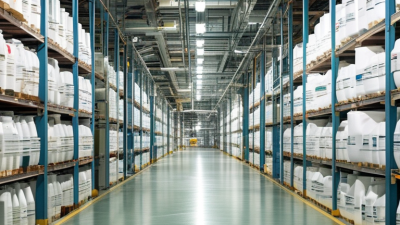
China Best Chemical Complex Suppliers for Global Buyers
China’s chemical complex sector connects feedstock processing, specialty chemicals, industrial gases, and downstream manufacturing. For global buyers, supplier selection involves more than comparing prices. It requires evidence of stable production, transparent quality systems, safe logistics, and regulatory awareness.
Andrew Liveris, former Dow chairman and CEO, once described the chemical industry as “the industry of industries.” His observation remains relevant. A capable chemical complex supports sectors such as construction, agriculture, electronics, packaging, and healthcare. However, scale alone does not prove reliability. Buyers should examine plant capacity, batch consistency, laboratory testing, export experience, and emergency response procedures. A factory visit can reveal details that brochures omit, including storage conditions, labeling practices, and maintenance discipline.
Practical evaluation matters.
Leading Chinese suppliers may provide ISO 9001 and ISO 14001 certifications, technical data sheets, safety data sheets, and traceable batch records. Responsible suppliers also explain how their products meet destination-market requirements, including applicable chemical registration, transport, and environmental rules. Independent audits can strengthen confidence, especially when purchasing solvents, polymers, additives, or other sensitive materials.
Yet no supplier is perfect. Documentation may be incomplete, communication can slow during peak seasons, and quoted capacity may differ from available capacity. This is where careful buyers should ask uncomfortable questions. Can the supplier maintain quality during demand spikes? Are backup raw-material sources available? How quickly can nonconforming goods be investigated?
This guide examines China’s strongest chemical complex suppliers through a practical, evidence-based lens. It focuses on capability, compliance, product consistency, and long-term cooperation rather than impressive claims alone.
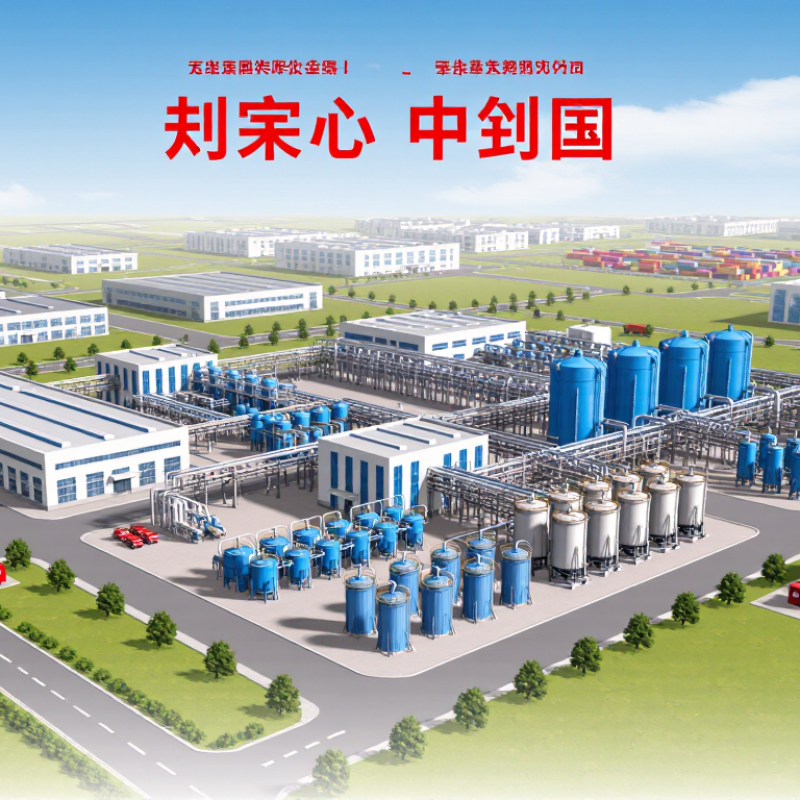
China’s chemical complex suppliers provide more than bulk materials. They often connect feedstock sourcing, formulation, processing, packaging, and export logistics. This integrated model can reduce handoffs and improve batch consistency. It also gives buyers one technical contact for specifications, audits, and corrective actions.
The International Energy Agency reports that chemicals use about 14% of global oil demand and 8% of gas demand as feedstock. This explains why reliable suppliers need strong energy, storage, and production controls. Capable facilities may provide solvents, polymers, additives, intermediates, and customized blends. They should also offer certificates of analysis, safety data sheets, batch traceability, and independent testing options. Clear documentation matters as much as price.
The European Chemical Industry Council reported that China represented roughly 43% of global chemical sales in 2023. That scale supports broad capacity, but it does not guarantee equal performance. Buyers should inspect production records, laboratory calibration, wastewater controls, and loading procedures. A video tour is useful, yet an onsite audit is stronger. The gap is real. Some suppliers respond quickly before technical details are fixed. That can create avoidable rework. Experienced buyers should confirm purity ranges, packaging dimensions, shelf life, delivery terms, and change-control rules in writing. Small details often decide whether a shipment performs well in a real plant.
A practical overview of common products, services, documentation, and export capabilities available from chemical complex suppliers in China.
| Supply Dimension | Typical Supplier Offering | What Global Buyers Commonly Receive | Commercial or Operational Value | Recommended Verification |
|---|---|---|---|---|
| Basic Inorganic Chemicals | Acids, alkalis, salts, oxidizers, and industrial water-treatment chemicals | Common materials may include hydrochloric acid, sulfuric acid, sodium hydroxide, sodium carbonate, calcium chloride, sodium hypochlorite, and related industrial grades. | Supports chemical processing, mining, water treatment, metal treatment, pulp and paper, and general manufacturing. | Specification sheet, concentration, impurity limits, SDS, COA, and applicable dangerous-goods classification. |
| Organic Chemical Intermediates | Solvents, plasticizer intermediates, pharmaceutical intermediates, agrochemical intermediates, and specialty organic compounds | Suppliers commonly provide products in technical, industrial, electronic, agricultural, or other application-specific grades according to the buyer’s required specification. | Provides raw materials for coatings, polymers, pharmaceuticals, crop-protection products, dyes, adhesives, and electronics manufacturing. | CAS number, assay, appearance, moisture, chromatographic data where applicable, COA, SDS, and sample approval. |
| Polymers and Resins | Synthetic resins, polymer additives, elastomer-related materials, and engineering-plastic feedstocks | Available formats may include powders, pellets, flakes, liquids, or pastes, with grades selected according to viscosity, molecular weight, thermal performance, or processing method. | Supports plastics processing, packaging, construction materials, automotive components, electrical products, and industrial coatings. | Technical data sheet, melt-flow or viscosity data, thermal properties, additive content, packaging specification, and application trial. |
| Fertilizer and Agricultural Inputs | Nitrogen, phosphate, potassium, compound fertilizers, micronutrients, and formulation ingredients | Products may be supplied as granules, crystals, powders, liquids, or water-soluble formulations, subject to local agricultural and import requirements. | Offers crop nutrition inputs for distributors, farms, blending facilities, and agricultural product manufacturers. | Nutrient analysis, particle-size distribution, moisture, heavy-metal limits, registration requirements, and packaging labels. |
| Coatings, Adhesives, and Construction Chemicals | Binders, curing agents, dispersants, defoamers, waterproofing materials, and concrete admixture components | Suppliers may provide standard formulations or adjust solid content, viscosity, curing speed, color, compatibility, and application performance for specific projects. | Enables formulation of paints, sealants, flooring systems, insulation materials, repair products, and concrete solutions. | Application data, compatibility test, viscosity, solids content, curing profile, VOC information, and retained sample. |
| Water-Treatment Chemicals | Coagulants, flocculants, disinfectants, scale inhibitors, corrosion inhibitors, and ion-exchange materials | Supply programs may cover municipal water, industrial wastewater, cooling systems, boilers, mining wastewater, and process-water applications. | Helps control suspended solids, microbial growth, scaling, corrosion, and wastewater-treatment performance. | Jar-test or field-test results, active-content analysis, SDS, dosing guidance, impurity profile, and regulatory compliance. |
| Custom Manufacturing | Contract production, toll manufacturing, process development, and custom synthesis | Qualified facilities may support laboratory development, pilot production, scale-up, reaction optimization, purification, drying, and packaging under an agreed technical specification. | Allows buyers to source application-specific materials without investing in additional production equipment or process development. | Process-flow review, plant audit, confidentiality agreement, batch records, change-control procedure, and pilot-batch evaluation. |
| Quality Management | Batch testing, quality-control systems, traceability, and certificate management | A structured supplier typically provides lot numbers, production dates, test results, retention samples, inspection records, and documented handling of nonconforming goods. | Improves consistency, supports incoming inspection, and simplifies complaint investigation and regulatory documentation. | Quality manual, ISO 9001 evidence where applicable, laboratory capability, COA format, traceability exercise, and audit results. |
| Safety and Regulatory Documentation | SDS, technical data sheets, labels, dangerous-goods information, and export documentation | Documentation commonly covers product identity, hazards, composition, first aid, fire response, handling, storage, exposure controls, transport information, and disposal guidance. | Supports safe handling, customs clearance, warehouse management, workplace training, and destination-market compliance. | Current SDS revision, local-language requirements, GHS labeling, transport classification, and document consistency with the COA. |
| Packaging Options | Bags, drums, fiber drums, cartons, IBCs, tank containers, and bulk shipment options | Packaging can often be selected according to material properties, hazard class, moisture sensitivity, shelf life, container type, and destination-port requirements. | Reduces leakage, contamination, moisture uptake, handling risk, and repacking costs during international transport. | Packaging material, net and gross weight, pallet configuration, UN packaging mark where required, seal method, and loading photos. |
| Export Logistics | Container loading, freight coordination, port documentation, and shipment tracking | Export support may include commercial invoices, packing lists, certificates of origin, bills of lading, customs data, and coordination with freight forwarders. | Simplifies cross-border purchasing and improves visibility from factory dispatch to destination delivery. | Incoterms, lead time, port of loading, shipping schedule, insurance responsibility, customs documents, and container inspection records. |
| Product Development Support | Sample supply, formulation assistance, technical consultation, and application testing | Technical teams may help evaluate compatibility, dosage, solubility, viscosity, particle size, stability, curing behavior, or performance in the buyer’s process. | Shortens product-selection cycles and helps reduce the risk of adopting an unsuitable grade for production. | Sample identification, test protocol, performance benchmark, technical contact, trial report, and agreed acceptance criteria. |
| Sustainability and Resource Efficiency | Energy-efficiency programs, waste reduction, solvent recovery, wastewater control, and recycled or bio-based options where available | Some facilities provide environmental data, waste-treatment information, recycled-content details, or life-cycle-related documentation for selected products. | Helps buyers meet internal sustainability goals, customer requirements, and environmental reporting expectations. | Environmental permits, emissions data, waste-disposal records, sustainability statements, and third-party certifications where applicable. |
| Commercial Flexibility | Trial orders, recurring supply contracts, private-label-free bulk supply, and production scheduling | Commercial terms may be structured around minimum order quantity, annual volume, delivery frequency, payment terms, safety stock, and agreed price-adjustment mechanisms. | Makes it easier to qualify a material, control inventory, and establish a stable supply plan without relying on brand-based purchasing. | Written quotation, minimum order quantity, capacity statement, payment terms, validity period, supply agreement, and production slot confirmation. |