Hard water is not merely a cloudy kettle. It can leave chalky deposits on faucets, shower glass, heating elements, and industrial pipelines. The U.S. Geological Survey identifies calcium and magnesium as the main causes of water hardness. The World Health Organization’s 2011 background document also notes that hardness is mainly a technical and aesthetic concern, not a universal health hazard. That distinction matters.
Industry figures require careful reading. Grand View Research’s Water Softener Market Size, Share & Trends Analysis Report describes steady global demand for residential and commercial water-treatment equipment. However, market data for the specific Hard Water Descaler segment remains fragmented. Some reports combine electronic descalers, magnetic devices, salt-free conditioners, and traditional softeners. Comparing them directly can produce misleading results.
This guide examines China’s top 10 Hard Water Descaler manufacturers through a practical purchasing lens. The assessment considers product design, treatment claims, laboratory evidence, production capacity, export experience, warranty terms, and compliance documentation. It also reviews details buyers often notice during installation, such as cable length, pipe compatibility, enclosure quality, and signal stability near metal fittings.
No ranking is flawless. Supplier information changes. Independent test evidence is sometimes limited. That caveat matters. Readers should verify certifications, test methods, and actual operating conditions before placing an order. A polished brochure cannot replace measured performance. The strongest manufacturers combine engineering knowledge with transparent technical records, responsive after-sales service, and realistic claims about scale prevention. This introduction provides the context for comparing those manufacturers more responsibly.
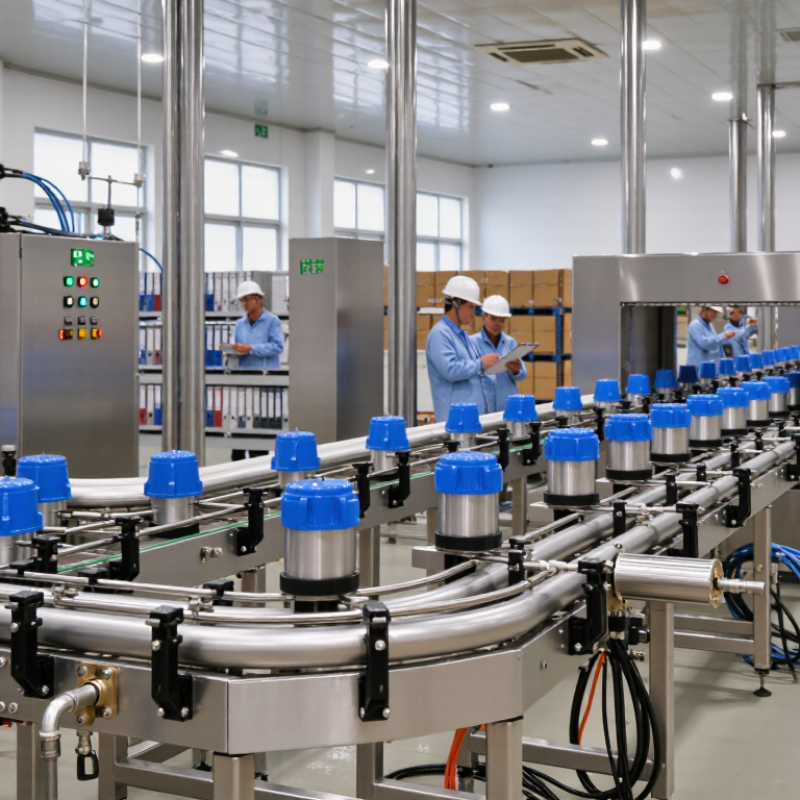
Hard water descalers are practical tools for controlling mineral scale in industrial water systems. Hard water carries calcium and magnesium ions. When heated, these minerals form deposits inside pipes, boilers, heat exchangers, and spray nozzles. A descaler can change crystal formation or reduce mineral adhesion. It does not always remove dissolved minerals. This distinction matters.
In factories, scale can narrow flow paths and reduce heat transfer. Operators may notice higher energy use, uneven heating, or frequent cleaning. Food processing plants, laundries, cooling towers, and commercial kitchens often need reliable scale control. Performance depends on water chemistry, temperature, flow rate, and equipment design. Experienced technicians should test water before selecting equipment. Descaling should be measured, not guessed. No single method solves every site problem. That assumption often causes disappointment.
Tips: Check hardness, alkalinity, and operating temperature regularly. Inspect a heat exchanger for rough deposits and reduced flow. Compare energy readings before and after installation. Keep maintenance records, even when results look positive. Small changes can reveal larger process issues. Reconsider the setup if scale returns quickly.
Ranking China’s top hard water descaler manufacturers requires more than comparing catalog prices. A credible review should examine field experience, technical depth, and documented performance. Manufacturers should explain how their systems address calcium and magnesium buildup under different water conditions.
Testing must begin with real samples. Reviewers should check hardness, alkalinity, iron content, flow rate, and inlet pressure. A reliable manufacturer can provide pilot-test data, maintenance records, and clear operating limits. Claims without test conditions deserve caution. Small details matter.
Product design also affects the ranking. Assess media quality, electrical safety, pressure loss, replacement intervals, and resistance to scaling in pipes, heaters, and industrial equipment.
Factory audits can reveal process control, worker training, and inspection routines. Certifications support credibility, but they do not replace independent verification. After-sales service should include installation guidance, troubleshooting, spare-part access, and response-time records. These practical points often separate experienced manufacturers from capable newcomers.
No scorecard is perfect. Laboratory results may not match a hotel, factory, or rural home. A fair ranking should therefore combine verified documents with site feedback and repeat testing. Transparent pricing also matters, including energy use, consumables, labor, and disposal costs. The lowest purchase price can become expensive after one year. Manufacturers willing to disclose weaknesses may deserve more trust than those presenting flawless claims.
This profile-based guide examines ten Chinese manufacturers serving residential, commercial, and industrial water-treatment markets. One specializes in salt-free catalytic media for reducing scale inside pipes and heaters. Another develops electronic descalers for apartments, restaurants, and compact utility rooms. Its engineers often focus on simple installation and low maintenance. A third manufacturer supplies whole-house systems with replaceable filter cartridges and pressure-rated housings. Some models include transparent chambers, making sediment buildup easy to inspect.
Another company concentrates on ion-exchange technology for users needing measurable hardness reduction. This approach requires regeneration planning and regular salt handling.
One manufacturer builds commercial units for laundries, hotels, and food-service facilities. Its projects usually require flow calculations, water testing, and careful bypass-valve design.
A separate supplier produces OEM equipment for distributors, with configurable control panels and custom cabinet sizes. Specifications matter more than appearance here.
Several manufacturers focus on industrial applications, including boiler protection and process-water pretreatment. Their systems may combine prefilters, dosing controls, and monitoring instruments.
One company emphasizes stainless-steel vessels for humid or demanding installation environments. Another develops small descalers for kitchens, rental properties, and renovation projects.
The tenth manufacturer stands out through laboratory testing and pilot installations before mass production.
Still, product claims deserve scrutiny.
Hardness reduction, scale prevention, and corrosion control are different results. Buyers should request test conditions, flow limits, media replacement intervals, and local service details before choosing equipment.
China Top 10 Hard Water Descaler Manufacturers
China’s leading hard water descaler manufacturers serve homes, hotels, factories, and food-processing sites. Their product ranges often include electronic descalers, magnetic units, catalytic media systems, and salt-free crystallization devices. Each type handles scale differently. Electronic units send controlled signals through pipe sections. Magnetic models are compact, but performance may vary with flow rate and water chemistry. Media systems require cartridge replacement and accurate sizing.
More established manufacturers publish data on calcium hardness, flow rate, pressure loss, and operating temperature. Some use sensors to adjust treatment intensity as demand changes. Others combine prefiltration with anti-scale media. This can protect heaters, shower valves, and narrow boiler passages. A reliable supplier should explain test conditions, rather than make broad prevention claims. Field engineers may test a 200-liter water sample, inspect pipe surfaces, and record hardness before installation. Results still depend on plumbing age and cleaning habits.
Service capabilities often separate a practical system from an attractive catalog. Look for water analysis, application design, installation guidance, remote troubleshooting, spare-part planning, and technician training. Export-ready teams should provide manuals, wiring details, warranty terms, and responsive communication. Some factories offer private-label support, but documentation quality can be uneven. I would request a pilot installation before approving a large order. A clean demonstration is not enough. Long-term performance deserves scrutiny.
Product Types, Technologies, and Service Capabilities Compared
Removes calcium and magnesium ions from water. It requires regeneration with salt or another regenerant.
Uses a semipermeable membrane to reduce dissolved minerals, but requires pretreatment and produces reject water.
Transforms dissolved hardness into microscopic crystals that are less likely to adhere to surfaces; it does not remove hardness minerals.
Controls scale formation through sequestration rather than reducing the measured calcium and magnesium concentration.
The chart presents representative engineering ranges for technology-level comparison, not company or brand performance claims. Actual results depend on feed-water hardness, temperature, flow rate, pH, maintenance, and system design. Hardness values are commonly reported as mg/L as CaCO₃.
Selecting a reliable Chinese hard water descaler supplier requires evidence, not polished catalogs. The USGS classifies water above 180 mg/L as calcium carbonate as very hard. This level can leave white deposits on kettles, shower glass, and heating coils. Ask the supplier to test water with your actual hardness, temperature, flow rate, and pipe material. Laboratory conditions matter.
Request a complete technical file. It should include material specifications, operating limits, maintenance requirements, and test results from an independent laboratory. The WHO Guidelines for Drinking-water Quality state that hardness is generally not a health concern at normal drinking-water levels, but it can create scaling and reduce equipment efficiency. A dependable supplier should therefore avoid promising health benefits. It should explain whether the device reduces scale, changes crystal formation, or removes minerals through ion exchange. These are different functions.
Audit the factory beyond the showroom. Check production records, incoming-material controls, calibration certificates, and batch traceability. Ask for samples from three production batches. Compare pressure loss, flow stability, and scale formation over a defined test period. The Water Quality Association reports that hard water affects a large share of households in North America, showing strong demand, but demand does not prove performance. Be cautious with dramatic savings claims. A low price can look efficient. It may not be. Also review response times, spare-part availability, warranty terms, and export packaging. One overlooked detail is after-sales testing. Suppliers that welcome third-party inspections usually provide stronger evidence of reliability.
| No. | Supplier Evaluation Dimension | 1 | Product Technology | Clearly defined technology, such as electronic scale-control, template-assisted crystallization, or physical water-conditioning methods. | Technical datasheet, operating principle, installation diagram, and test conditions. Confirm whether the product is a descaler rather than a water softener. | Confusing scale control with hardness removal may lead to incorrect product selection and unsuitable customer expectations. | |
|---|---|---|---|---|---|---|---|
| 2 | Hardness and Water-Quality Range | Published limits for water hardness, flow rate, temperature, pressure, pH, and conductivity where applicable. | Product specifications and laboratory or field test reports using stated water-quality parameters. | Performance can vary substantially when actual water chemistry exceeds the stated operating range. | |||
| 3 | Flow-Rate Capacity | Rated flow capacity should match the intended application, including residential, commercial, boiler, laundry, or process-water use. | Flow-rate chart, pipe-size compatibility, pressure-loss data, and recommended installation distance from the protected equipment. | An undersized unit may provide incomplete protection, while an incorrectly sized unit may increase project cost. | |||
| 4 | Material and Electrical Safety | Water-contact materials should be suitable for the application; electrical products should specify input voltage, ingress protection, and operating temperature. | Material declarations, electrical safety test documents, enclosure rating information, wiring diagrams, and sample inspection results. | Inadequate materials or electrical protection can create leakage, corrosion, overheating, or installation-safety concerns. | |||
| 5 | Quality Management | A documented quality system with incoming-material inspection, in-process checks, final testing, and traceability. | Quality manual, inspection checklist, batch records, corrective-action procedure, and an independent factory-audit report when available. | Inconsistent production quality may result in unstable output, premature failure, and difficult after-sales handling. | |||
| 6 | Compliance Documentation | Compliance documents should correspond to the exact model, electrical version, target market, and shipment configuration. | Model-specific declarations, applicable test reports, packaging labels, user manuals, and country-specific import documents. | Generic or mismatched certificates may not support customs clearance, marketplace listing, or local installation requirements. | |||
| 7 | Customization Capability | Ability to provide approved changes to housing, connectors, cable length, control settings, packaging, manuals, and language. | Engineering-change procedure, sample approval workflow, drawings, artwork proof, and written confirmation of customization limits. | Uncontrolled customization can cause compatibility problems, undocumented safety changes, or inconsistent repeat orders. | |||
| 8 | Production and Delivery Capability | Confirm realistic minimum order quantity, standard lead time, monthly capacity, production schedule, and packaging method. | Formal quotation, production timeline, capacity statement, sample-order terms, shipping dimensions, and inspection plan before dispatch. | Unclear capacity or delivery commitments may cause stock shortages, missed projects, and higher logistics costs. | |||
| 9 | Warranty and Technical Support | Written warranty terms should state coverage period, exclusions, spare-parts policy, response time, and troubleshooting responsibilities. | Warranty document, installation guide, fault-code list, maintenance instructions, spare-parts price list, and service contact procedure. | Verbal promises may not provide sufficient protection when installation faults, transport damage, or recurring product failures occur. | |||
| 10 | Verification Before Purchase | Complete a sample evaluation, document review, factory or third-party inspection, and performance confirmation before placing a large order. | Signed technical specification, approved sample, inspection report, water-test results, purchase contract, and agreed acceptance criteria. | Buying solely on catalog claims increases the possibility of specification changes, unsuitable performance, and costly disputes. |
Contact our team with questions, product inquiries or challenge us to engineer a solution for you.
Tel: +1 716 433 6764
Fax: +1 716 433 2850
Email: sale@ashymed.com
VanDeMark Chemical Inc.
One North Transit Road
Lockport, NY 14094 USA