Top 10 Chemical Complexes in China for Global Buyers
China’s chemical industry is built around large, interconnected industrial zones. A well-positioned chemical complex may offer shared utilities, nearby ports, storage facilities, and access to established suppliers. For global buyers, these connections can affect delivery schedules and operating costs. They also shape how easily a supplier can meet a project’s technical requirements.
This guide introduces ten notable complexes and the factors buyers may wish to examine. Location is only one part of the picture. Product range, infrastructure, environmental management, quality systems, and logistics all deserve attention. Some parks specialize in particular materials; others benefit from broader industrial networks. Details can change, and public information may not tell the whole story. A shortlist is not a verdict. That distinction matters.
Buyers should verify facility capabilities, current certifications, production capacity, and export arrangements directly with prospective suppliers. Ask for clear specifications and recent documentation. Check whether a site can handle the required volumes, packaging, and delivery windows. Port access on a map does not guarantee smooth shipment. Nor does a prominent park name prove that every tenant follows the same standards. A chemical complex can provide useful context, but supplier-level checks remain essential. This overview is a starting point—not a substitute for careful evaluation.
What Defines a Chemical Complex and Its Role in China’s Industry
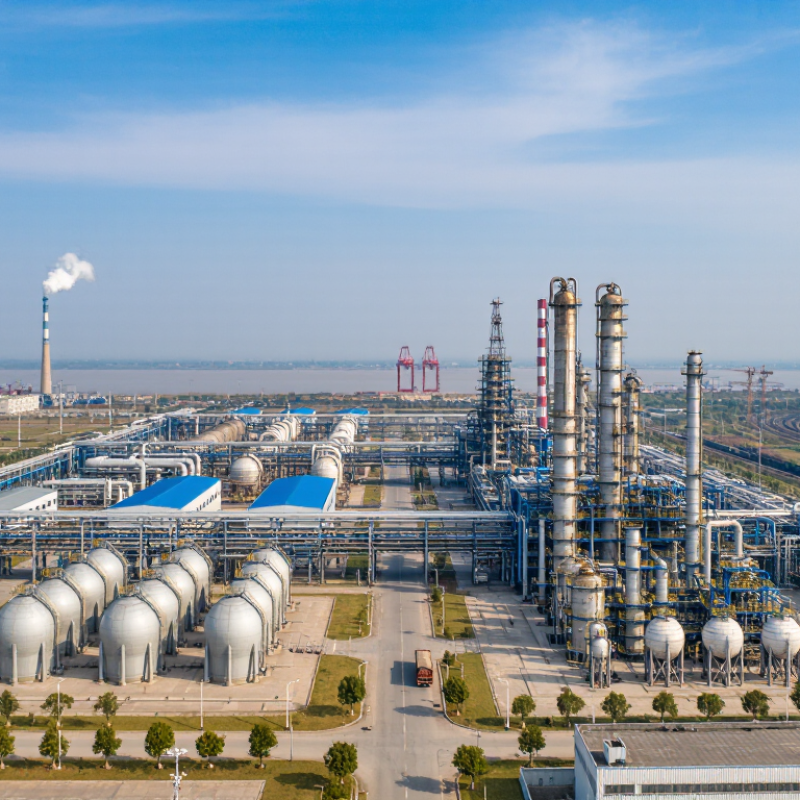
A chemical complex is more than a cluster of factories. It is an industrial site where producers, utilities, storage facilities, and transport links operate within a coordinated area. In China, such complexes may include units that turn basic feedstocks into materials for manufacturing, construction, agriculture, and consumer goods. Shared pipelines, power systems, water treatment, and ports can reduce duplication and shorten the distance between production stages.
The layout matters. A tank farm near processing units, clear pipe routes, and reliable road or rail access can affect daily operations. Centralized wastewater treatment and safety monitoring also help manage risks across the site. These features do not guarantee efficient or responsible production. Buyers should check product specifications, supply capacity, delivery options, and independently verifiable environmental and safety information.
Details vary. Some complexes focus on refining and basic chemicals; others support more specialized manufacturing. Their role in China’s industry is to connect feedstock supply with downstream production, while supporting regional jobs and infrastructure. Yet scale alone says little about consistency. A buyer may need to ask how maintenance affects delivery, how utilities are managed during disruptions, and whether published data is current. Those questions can be awkward, but they are useful.
How China’s Chemical Complexes Are Assessed for Global Buyers
For global buyers, a chemical complex is more than a cluster of plants. Assessment starts with product scope, operating capacity, and the ability to provide consistent technical documentation. Buyers should compare stated capacity with recent production records, not rely on headline figures alone. A site visit can reveal practical details: separate storage areas, visible maintenance logs, and clear loading procedures. Small signs matter.
Location & Reliability
Location also shapes reliability. Review access to ports, rail lines, roads, utilities, and qualified labor. Ask how the complex manages planned maintenance and unexpected interruptions. Request sample specifications, quality-control procedures, and shipment records for comparable orders. These documents help buyers judge whether a supplier can meet a particular grade and delivery schedule. They do not guarantee future performance.
Environment, Safety & Verification
Environmental management and worker safety deserve the same careful review as price and output. Examine monitoring practices, emergency procedures, and the responsibilities of site operators. Independent audits can add useful evidence, though their scope and date should be checked. Some information may remain incomplete, and a polished presentation is not proof of strong operations. Buyers should record open questions, verify answers with more than one source, and weigh practical risks alongside cost.
Top 10 Chemical Complexes in China: Locations and Core Products
China’s chemical industry is spread across coastal ports, refining hubs, and inland resource regions. Daqing and Jilin are known for petrochemicals, synthetic materials, and basic chemical feedstocks. Liaoning’s Dalian–Panjin area combines refining with plastics and intermediate chemicals. Tianjin offers port access and a broad mix of petrochemicals and specialty materials.
Shandong’s coastal and inland clusters produce fertilizers, plastics, and industrial chemicals. Shanghai and Nanjing support fine chemicals, polymers, and research-led production. Ningbo is a major coastal base for petrochemicals and plastics. Further south, Quanzhou in Fujian focuses on refining and downstream materials, while Huizhou in Guangdong supplies petrochemicals, polymers, and related products. These locations form a useful shortlist, but each complex has its own product mix and capacity. Conditions change.
Tips: Match the site to your cargo and process needs. Check current product specifications, export handling, port distance, and available storage directly with suppliers. Ask for recent quality documents and production schedules. A nearby port may still involve inland trucking, delays, or extra handling. Location is only part of the decision.
Comparing Production Capacity, Infrastructure, and Export Access
China’s chemical complexes differ less by headline capacity than by how reliably they move materials. Large coastal sites often benefit from deep-water ports, nearby storage terminals, and established freight routes. Inland complexes may offer strong feedstock links and room for expansion, but longer rail or truck journeys can add time and cost. A high annual capacity figure is useful only when buyers can confirm operating rates, product specifications, and available allocation.
Infrastructure deserves a close look. Check whether the site has pipeline connections, dependable utilities, wastewater treatment, and access to container or bulk shipping. Ask for recent export records and typical port-to-vessel lead times, not just distance to the coast. Capacity data can be hard to compare: some figures describe a whole industrial park, while others cover one production line. That distinction is easy to miss. No single ranking fits every buyer.
Tips: Request a current site profile, production range, and route estimate. Compare delivered cost, not factory-gate price alone. Confirm sample testing and documentation procedures before planning a shipment. Leave room for delays; even well-equipped hubs can face maintenance or congestion. A spreadsheet helps, but it will not reveal every operational weakness.
Top 10 Chemical Complexes in China for Global Buyers
Indicative comparison of regional ethylene nameplate capacity and export access. Capacity figures are rounded estimates for major complexes; export access is a qualitative assessment based on coastal location and access to seaports.
Capacity is shown in million tonnes per year (Mt/y). Export access is rated from 1 (limited) to 5 (strong); inland clusters generally rely on rail, river, or pipeline links to reach seaports. Figures are indicative, not a verified ranking, and should be checked against current project and operating data before procurement decisions.
How Global Buyers Can Evaluate Suppliers and Plan Procurement
For global buyers comparing chemical complexes in China, supplier evaluation should start with the exact product specification, not the site’s headline capacity. Request recent certificates of analysis, batch-to-batch test results, and written limits for moisture, color, and impurities. Check whether the proposed grade matches your process conditions. A technically acceptable sample may still behave differently at production scale.
Review the supplier’s operating permits, quality-management records, emergency procedures, and independent audit findings. Confirm who owns each step: production, testing, packaging, and export documentation. UNCTAD’s Review of Maritime Transport 2024 notes that over 80% of world merchandise trade by volume moves by sea, making port access, container availability, and shipment schedules practical procurement factors. Ask for a route plan with named handover points and realistic lead times. Paper plans can be optimistic.
Use the World Bank’s Logistics Performance Index 2023 as one reference when comparing transport environments; China ranked 19th among 139 economies. This national score cannot predict a specific complex’s performance, so validate local transit times directly. Build quotations around the delivered cost, including packaging, inland freight, inspection, and buffer stock. Start with a controlled trial order and define acceptance criteria before dispatch. Even then, forecasts can be wrong; keep a contingency supplier qualified, rather than assuming the cheapest offer is the safest choice.